High-Feed Milling in Hardened Steel: Where Chip Thinning Earns Its Keep
Summary
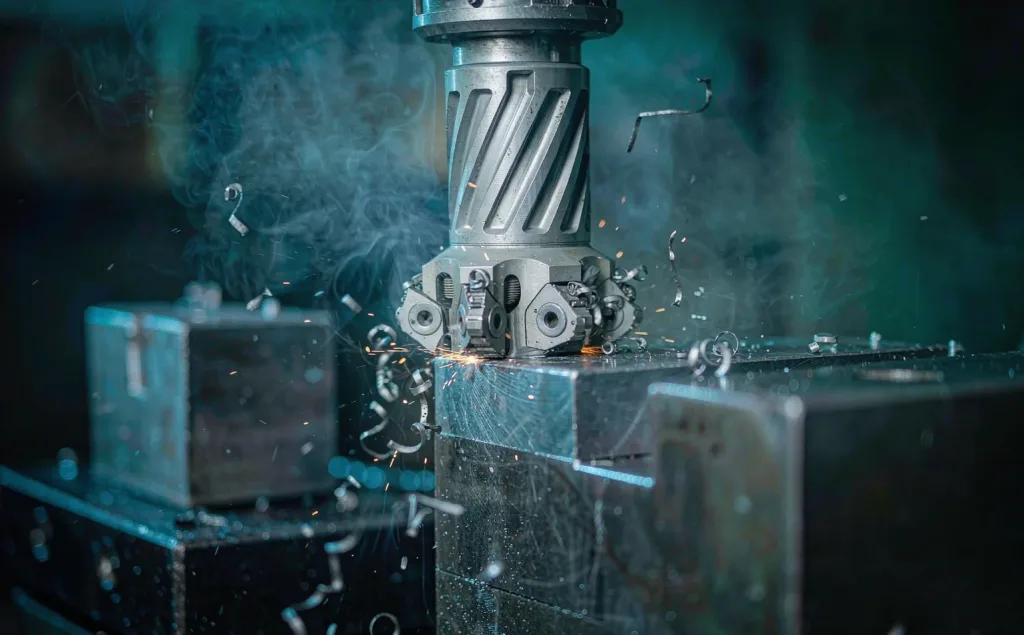
High-feed milling (HFM) has become a go-to roughing strategy for shops tackling hardened steels above 45 HRC. By exploiting chip thinning through a shallow lead angle and aggressive feed-per-tooth values, HFM pulls maximum metal-removal rates out of modest spindle power — but the geometry that makes it productive also narrows the window for error in radial engagement, insert selection, and machine rigidity.
How Chip Thinning Drives High-Feed Milling
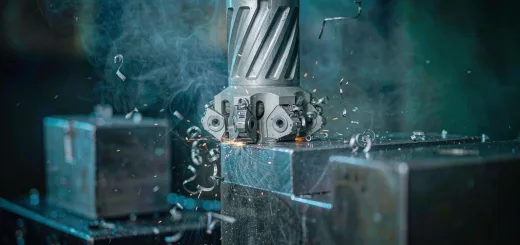
The core mechanism is geometric chip thinning. A high-feed insert uses a near-round or large-radius cutting edge with a lead angle typically under 15 degrees — sometimes as shallow as 5 degrees. When axial depth of cut (ap) stays below the insert’s corner radius, the chip cross-section becomes a thin crescent rather than the rectangular chip you’d get at full depth. This means the effective chip thickness (h) drops well below the programmed feed-per-tooth (fz), allowing you to push fz values of 0.5 to 1.2 mm/tooth while maintaining a chip thickness in the 0.05–0.15 mm range that carbide can tolerate in hardened material.
The relationship follows the approximation h = fz × sin(lead angle). At a 10-degree lead angle, sin(10°) ≈ 0.17, so a programmed fz of 1.0 mm/tooth yields an effective chip thickness of roughly 0.17 mm. That’s the math that lets HFM run feeds two to four times higher than conventional face milling at the same chip load.
Parameters in Hardened Steel
When milling hardened tool steels in the 45–60 HRC range, typical HFM parameters look like this:
- Axial depth of cut (ap): 0.3–1.0 mm. Shallow is the whole point — pushing deeper defeats the chip-thinning geometry and spikes cutting forces exponentially.
- Radial engagement (ae): 30–50% of cutter diameter. Wider than 50% and you lose the thinning effect on the trailing edge; narrower than 20% and productivity gains evaporate.
- Cutting speed (vc): 150–300 m/min depending on insert grade and coating. PVD-coated carbide (TiAlN or AlTiN variants) dominates this space; CBN inserts appear at the upper end for hardened steels above 55 HRC.
- Feed per tooth (fz): 0.4–1.2 mm/tooth for round-insert high-feed cutters in the 20–50 mm diameter range. Larger diameters and more teeth push table feed rates easily above 3,000 mm/min.
The metal removal rate (MRR) can hit 150–250 cm³/min on a 15 kW spindle — numbers that would stall the same machine under conventional roughing parameters at equivalent depths.
Shop-Floor Implications
HFM reshapes how you plan a roughing pass. Because axial depth is capped at roughly 1 mm, you’re taking many more Z-level passes than conventional milling — sometimes 8 to 15 passes for a 15 mm deep pocket. That sounds inefficient, but each pass removes material at a rate that conventional tooling can’t match at equivalent spindle load. The net cycle time typically drops 30–50% for hardened steel roughing.
Toolpath strategy matters. Trochoidal or peel-milling paths that maintain constant radial engagement are ideal — they avoid the shock of full-width immersions that snap high-feed inserts. CAM systems with volumetric toolpath engagement control are practically a prerequisite; hand-written G-code toolpaths with full-width stepovers will chip inserts on the first pass.
Insert indexing is another consideration. High-feed round inserts carry 4 to 8 usable edges depending on geometry. At the aggressive fz values HFM runs, edge chipping rather than gradual flank wear is the dominant failure mode — so tool life is measured in minutes of cutting time, not minutes per part. Shops that don’t track cumulative cutting time per insert will overshoot tool life and scrap parts.
Limitations
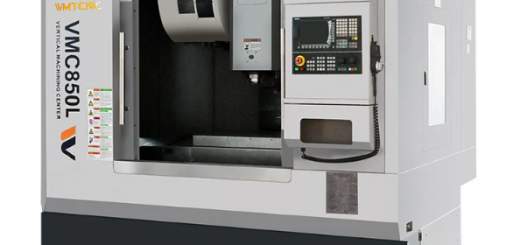
Vibration sensitivity on light machines. HFM’s high feed rates generate pulsating cutting forces at a frequency that excites structural resonances on lighter VMCs — particularly 40-taper machines with long tool overhang. A cutter running at 3,600 mm/min with 6 teeth produces a tooth-passing frequency that can couple with the spindle-spindle interface compliance, producing chatter that degrades surface finish and accelerates insert failure. 50-taper or geared-spindle machines handle this far better. If your machine can’t hold the tool rigidly, HFM’s productivity gains collapse into scrap parts and broken inserts.
Conclusion
High-feed milling is a proven roughing strategy for hardened steels, but it’s not a drop-in replacement for conventional methods. It demands shallow ap, controlled radial engagement, capable CAM toolpaths, and rigid fixtoring. Shops that treat it as a feed-rate override rather than a system-level strategy will burn through inserts without seeing the cycle-time gains the technique is known for.